
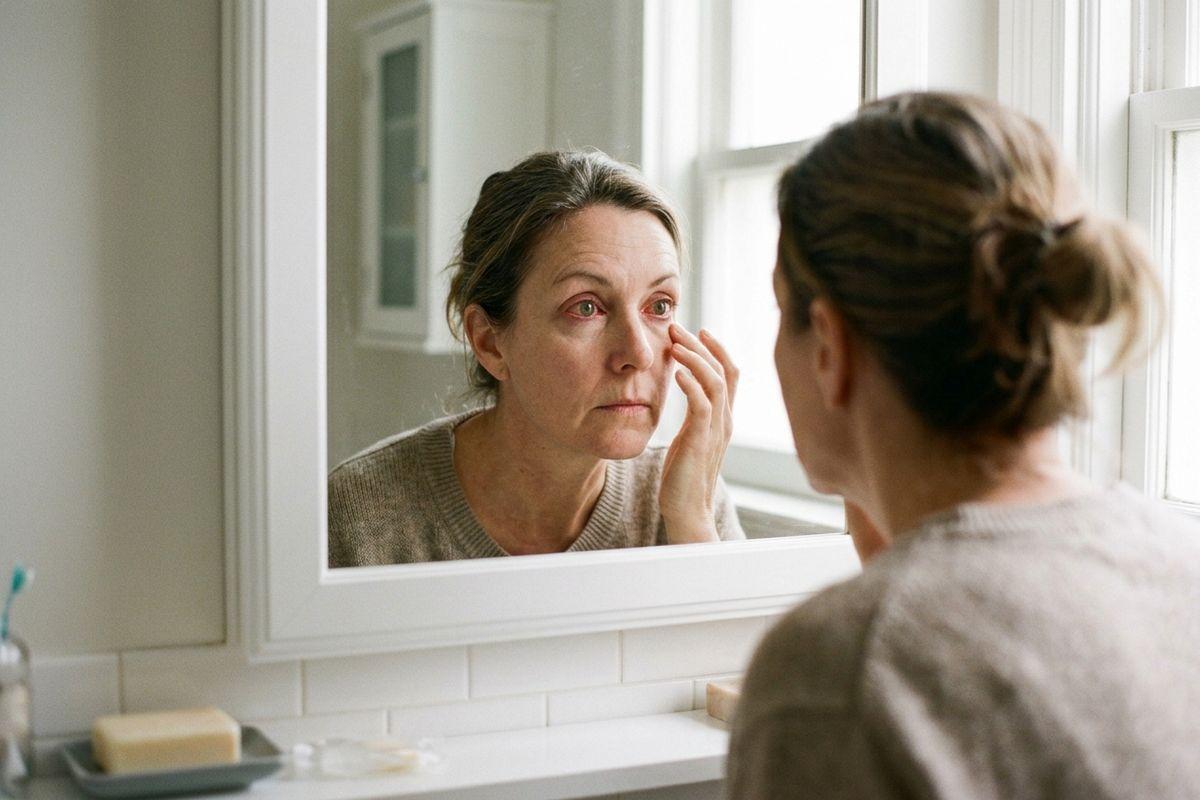
Waking up with a pink or bloodshot eye is unsettling, especially when nothing obvious explains it. It might sting a little. Often, it doesn’t hurt at all and just looks worse than it feels.
Either way, the surface of your eye has reacted to something. Your eye looks red when the small blood vessels across the front of it widen in response to irritation or inflammation. Allergies, dry eyes, long screen sessions, infections, minor scratches, and contact lenses worn longer than they should be can all cause it.
What’s Happening on the Surface of Your Eye
Blood vessels sit right on the front of your eye, thin enough that you don’t notice them most days. Irritation makes them fill and widen, and the white part of your eye turns pink or red.
The whole eye can turn red at once. Other times, only one corner or patch changes colour while the rest stays white, which can look worrying even when your eye feels fine.
Allergies and Airborne Irritants
Pollen through an open window, dust from a weekend cleanup, or dander from the cat who sleeps on your pillow will all irritate your eyes. Allergy redness almost always itches, and sneezing and a runny nose usually show up at the same time.
Allergic reactions in the eye tend to affect both eyes rather than one. Watch for these triggers around the house and yard:
- Tree and grass pollen in spring and early summer.
- Dust stirred up during cleaning or renovations.
- Pet dander on furniture and bedding.
- Chlorine in pool water.
Rinse your face and hands after time outdoors, and lay a cool compress over closed lids when the itching gets bad.
Dry Eye and Screen Time
When your eyes don’t produce enough tears, or the tears they make break up too quickly, the surface gets irritated and red. Dry eye can show up even in winter, when furnaces pull the moisture out of indoor air.
Screens are closely related to dry eye and cause redness in a similar way. You blink far less while reading a monitor, so the surface of your eye dries out between blinks.
Pink Eye and Other Infections
Pink eye comes from bacteria, a virus, or an allergic reaction. The mirror won’t tell you which, and the treatment depends entirely on the answer.
Viral pink eye moves quickly through a household, so wash your hands often and keep your own towel and pillowcase while it clears. Also, leave eye makeup in the drawer until the redness is gone so you don’t spread the bacteria onto your brushes and put it back into your eye.
Contact Lenses
Lenses worn past their replacement date can leave eyes looking red by evening. Sleeping in them or rinsing one under the tap also raises the odds of irritation and infection.
Follow the wear and care instructions that came with your lenses. Take them out before you swim or shower, because tap water and pool water both carry organisms that can stick to a lens and irritate your eye.
Other Reasons Your Eyes Turn Red
A speck of grit or sawdust can scratch the cornea, the clear front layer of your eye. That kind of redness usually comes with sharp pain and heavy watering.
A few other possibilities to keep in mind:
- Irritation along the lash line, which leaves lids crusty and sore.
- A broken blood vessel, which shows up as a bright red patch and usually clears on its own within a couple of weeks.
- Glaucoma, which can involve redness in some cases.

Symptoms to Watch Alongside Redness
Redness on its own often settles down. What matters is what comes with it. Keep an eye out for:
- Discharge from the eye or crusting around your lashes.
- Sensitivity to light.
- Eye pain or blurred vision.
- The feeling of something stuck in your eye.
- Redness sticking around longer than one to two days.
When Red Eyes Need a Closer Look
Book an appointment if a young child’s eyes turn red, pain or discharge appears, or the redness keeps returning without a clear reason.
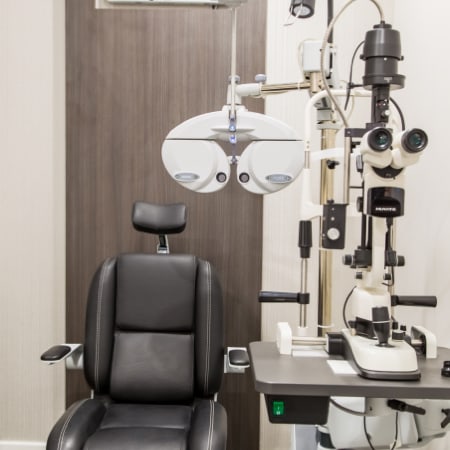
An optometrist can examine the surface of your eye under magnification and work out whether dryness, an infection, an allergy, or an injury explains the colour. From there you’ll know what actually treats it.
How to Care for Red Eyes and Lower Your Risk
Give your eyes a rest. A cool compress over closed lids can calm irritation, and gently washing along your lash line helps keep your lids clean. Lubricating drops can ease the sandpaper feeling if dryness is behind it.
On the other hand, avoid rubbing. Rubbing feels good for about 2 seconds, but it usually makes redness worse.
Small routines go a long way. Build a few of these into your week:
- Follow the replacement schedule on your contact lenses.
- Step away from your screen for short breaks throughout the day.
- Take eye makeup off before bed.
- Wash your hands frequently if you suspect an infection
Take the Next Step for Comfortable Eyes
Red eyes have plenty of possible explanations, and the right care depends on which one you’re dealing with. Rather than guessing, let an optometrist take a look.
Book an eye exam with Bluewater Optometry to find out what’s causing your red eyes and what you can do about it.