
Key Takeaways
- The retina is the only place in the body where blood vessels are visible without invasive procedures.
- High blood pressure can cause visible changes to retinal blood vessels, often before you notice any symptoms.
- An optometrist can spot these changes during a routine eye exam and flag them for follow-up.
- Unmanaged high blood pressure raises the risk of serious eye conditions, including hypertensive retinopathy and glaucoma.
- Regular eye exams can support your overall health, not just your vision.
What Your Eyes Reveal About Your Blood Pressure
You might sit down for a routine eye exam at Bluewater Optometry expecting to update your glasses prescription or check for dryness. What you may not expect is for your optometrist to identify cardiovascular concerns. But that’s exactly what can happen.
Eye exams can detect signs of high blood pressure, often before you notice changes on your own. The retina is one of the few places in the body where blood vessels can be seen directly and clearly, without any cuts or invasive tools, and it provides the clearest non-invasive view of the body’s small-vessel circulation.
That makes your retina a surprisingly informative window into your overall health. Here’s what your optometrist might notice during a routine exam, and what those findings can mean.
Signs of High Blood Pressure an Optometrist Can Spot
Changes in Blood Vessel Appearance
When your blood pressure remains high for a long period, this puts constant stress on the walls of your blood vessels. That stress leaves a visible mark.
Your optometrist may notice:
- Narrowing, kinking, or bending of retinal blood vessels
- Bleeding or leaking from vessel walls onto the retina
These aren’t changes you’d feel, so you’re not likely to notice the problem without a proper eye exam.
Other Eye-Related Warning Signs
Beyond the blood vessels themselves, high blood pressure can affect other structures inside the eye. Your optometrist may look for:
- Swelling or damage to the optic nerve
- Abnormal fluid buildup beneath the retina
- Signs of vascular damage that can lead to reduced clarity of vision
Each of these symptoms tells a story. Together, they can suggest a blood pressure problem that needs attention. A thorough eye exam can flag dozens of systemic health conditions, making it a valuable tool well beyond vision correction.
How an Eye Exam Checks for These Changes
Tools the Doctor Uses
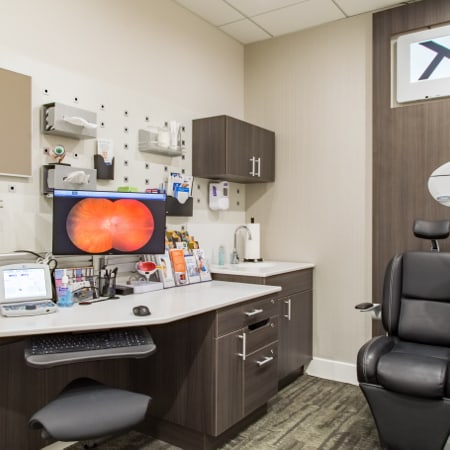
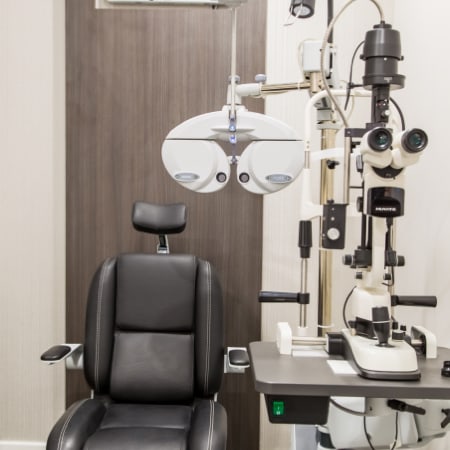
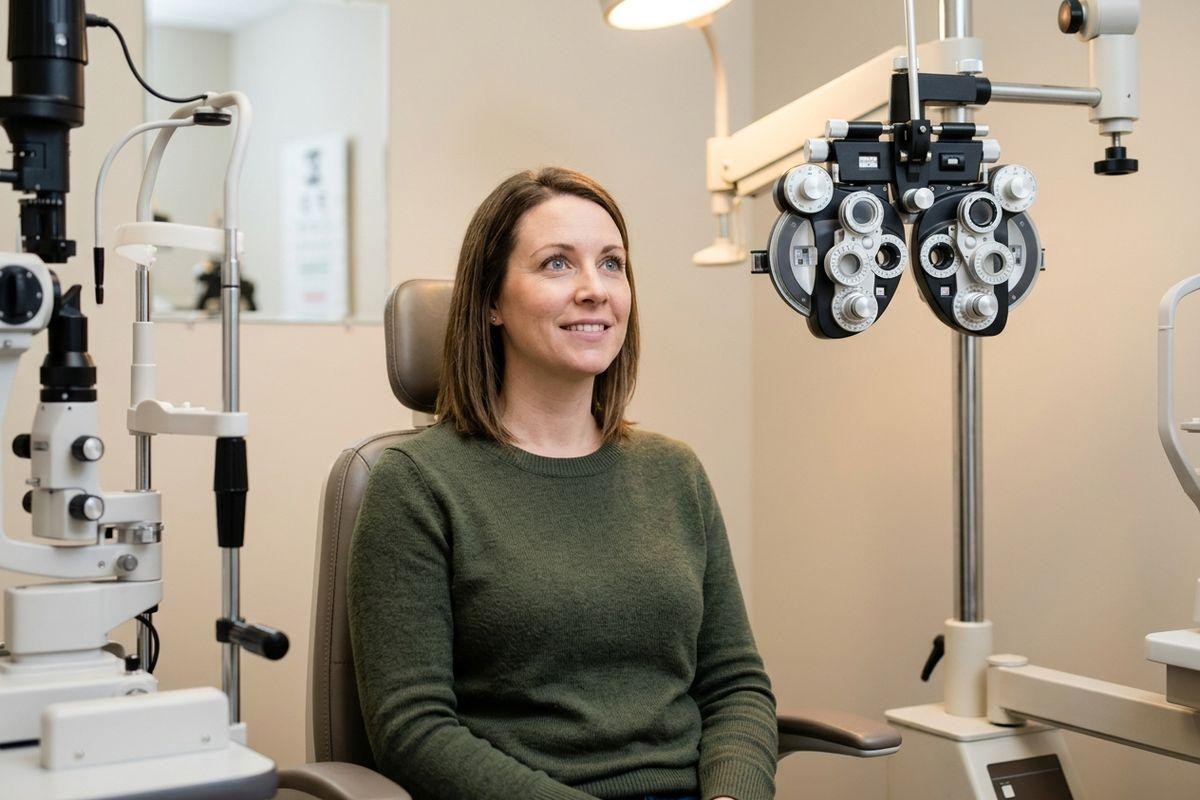
Getting a clear look at the retina requires the right tools. At Bluewater Optometry, we sometimes use dilated eye exams, where drops widen your pupils to give us a broader, clearer view of the retina.
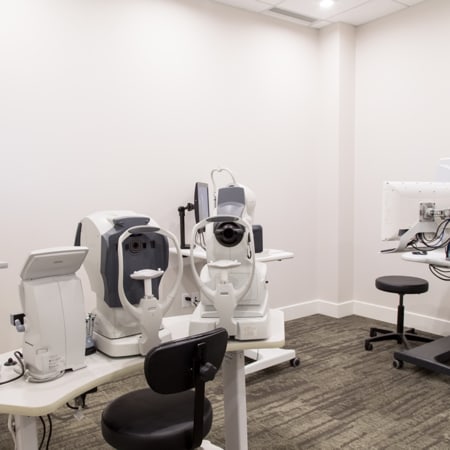
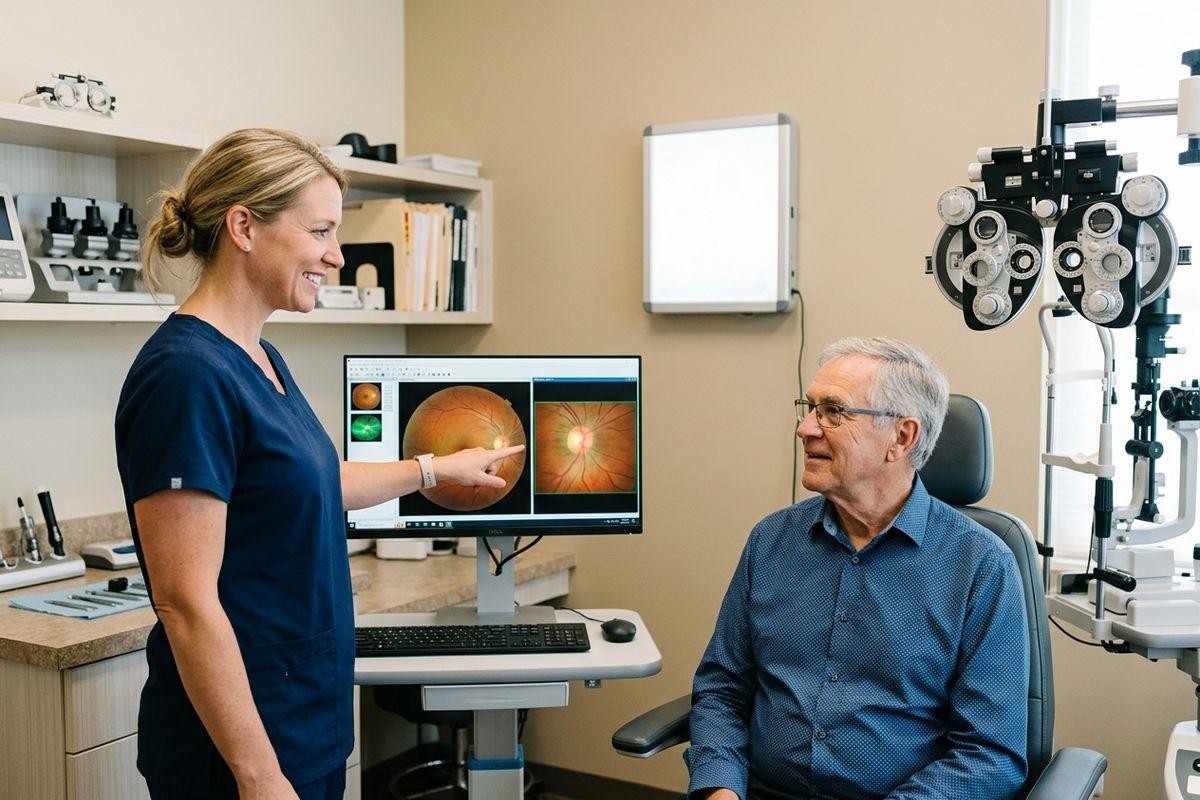
We can also use retinal imaging tools like OCT (optical coherence tomography) to capture detailed cross-sections of the retina, creating a record that makes it easier to track changes over time.
What Happens After a Concern Is Spotted
If your eye doctor spots something out of place, they’ll typically coordinate with your primary care provider so that any underlying blood pressure concerns can be properly assessed and managed. You may also be given a clear summary of what was observed and what next steps make sense.
High Blood Pressure and Your Long-Term Eye Health
Eye Conditions Linked to Hypertension
When blood pressure stays high over months or years, the effects on the eye can go beyond minor vessel changes. One of the more common outcomes is hypertensive retinopathy, a condition where the blood vessels of the retina become damaged. High blood pressure also raises the risk of developing glaucoma and macular degeneration, two conditions that can quietly affect your vision before you even notice symptoms.
Stroke Risk and the Eyes
Retinal blood vessels are structurally similar in size and pattern to the blood vessels in the brain. A blockage in a retinal vessel can sometimes signal a broader vascular risk, including for stroke. Catching these signs early gives you and your healthcare team a valuable head start.
How Often You Should Have Your Eyes Examined
If you have high blood pressure or diabetes, more frequent eye exams can make a real difference. Most adults benefit from an eye exam every two years, while children and seniors are typically advised to have yearly exams. People with conditions like diabetes or high blood pressure often need more frequent visits to stay on top of any changes.
Our team at Bluewater Optometry in Sarnia is ready to help you stay on top of your eye health, and what it can reveal about the rest of you. Book your eye exam today to keep tabs on what your eyes might be telling you.