
A long day on the water or out in the snow can leave your eyes feeling scratchy, sore, and sensitive to light. It might even feel like something is stuck in your eye, but nothing is there. What you’re likely experiencing is photokeratitis.
Photokeratitis is a condition where UV rays damage the outer surface of your eyes, specifically the cornea and conjunctiva, in the same way the sun burns your skin. It’s temporary in most cases, but it can be quite uncomfortable and worth taking seriously.
How Your Eye Can Get a Sunburn
Your skin isn’t the only part of your body that reacts to too much sun. Your eyes are just as vulnerable to UV damage, and the effects can sneak up on you. Much like a typical sunburn, photokeratitis doesn’t always show up right away. Symptoms often appear several hours after the exposure has happened.
The cornea, the clear front layer of your eye, and the conjunctiva, the thin tissue lining your eyelid and eye surface, absorb the UV rays and become inflamed. The good news is that photokeratitis usually resolves on its own. Most people start to feel better within 24 to 48 hours once the eyes have a chance to rest and recover.
What Leads to Photokeratitis
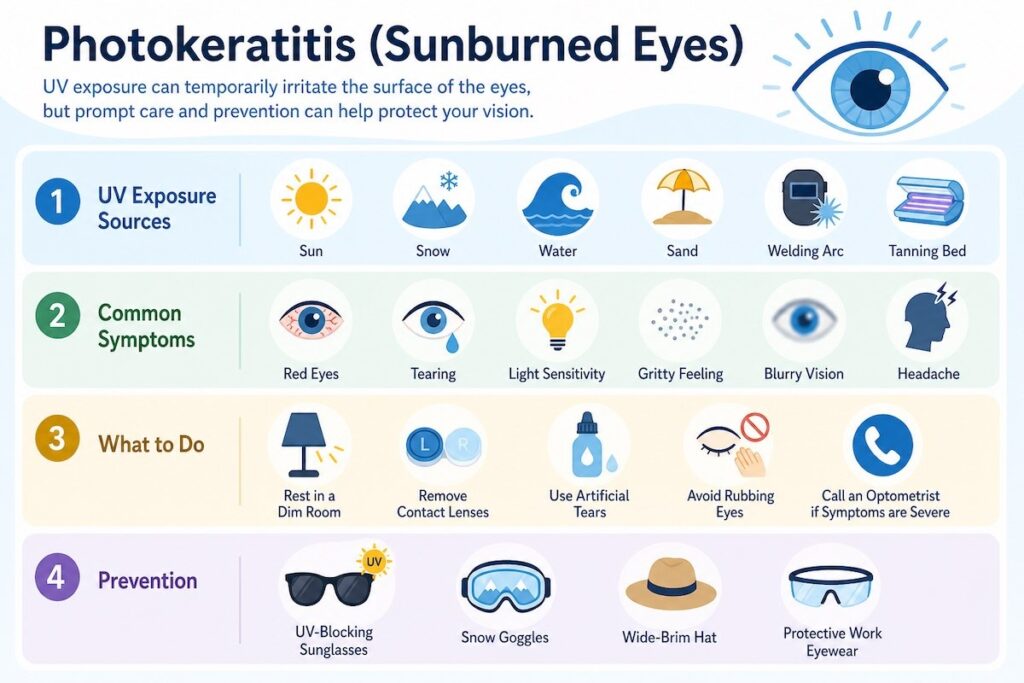
Sunlight is the most obvious source of UV exposure, but staring directly at the sun is not the only risk. UV rays reflect off surfaces like snow, water, and sand, which can intensify your exposure. Spending a day skiing or relaxing at the beach without eye protection puts you at real risk.
UV exposure doesn’t only come from the outdoors. Tanning beds, UV lamps, and welding equipment all emit UV radiation that can harm your eyes. Welders who work without a proper face shield sometimes develop a condition called “welder’s flash,” which is photokeratitis caused by the welding arc.
Mercury vapour lamps and certain laser lights are also sources of UV radiation that can damage unprotected eyes. Wear proper eye protection whenever you’re working with or around these tools.
Signs and Symptoms to Watch For
Symptoms of photokeratitis tend to appear between 1 and 6 hours after UV exposure. Pay attention to how your eyes feel in the evening after spending a long day outside. Keep an eye out for these common signs:
- Eye pain or aching
- Redness
- Tearing
- Sensitivity to light
- A gritty or sandy feeling in your eyes
- Blurry vision
- Swelling around the eyes
- Seeing halos around lights
- Headache or eyelid twitching
These symptoms can range from mild irritation to strong discomfort, depending on how long your eyes were exposed. Contact your eye doctor if your symptoms feel severe or do not improve.
How to Treat Photokeratitis
The first thing to do if your eyes feel uncomfortable is to get out of the sun and into a dim or dark room. If you wear contact lenses, remove them right away. Contacts can hold onto irritants and make inflamed eyes feel worse. Give your eyes a break from screens and bright light as much as possible.
Place a cool, damp cloth gently over your closed eyes to help ease the discomfort. Avoid rubbing your eyes, even when the itchy or gritty sensation is intense, because it can cause further irritation to the already sensitive tissue.
For more direct relief, use over-the-counter artificial tears to soothe your eye surface and flush out any irritants. Apply them as needed throughout the day to keep your eyes comfortable while they heal.
If the pain is more severe, your optometrist may recommend antibiotic eye drops to prevent infection or suggest appropriate pain-relief options. Dry eye therapy can also help, since the inflammation from photokeratitis affects the same surface tissues as dry eye.
How to Protect Your Eyes from UV Damage
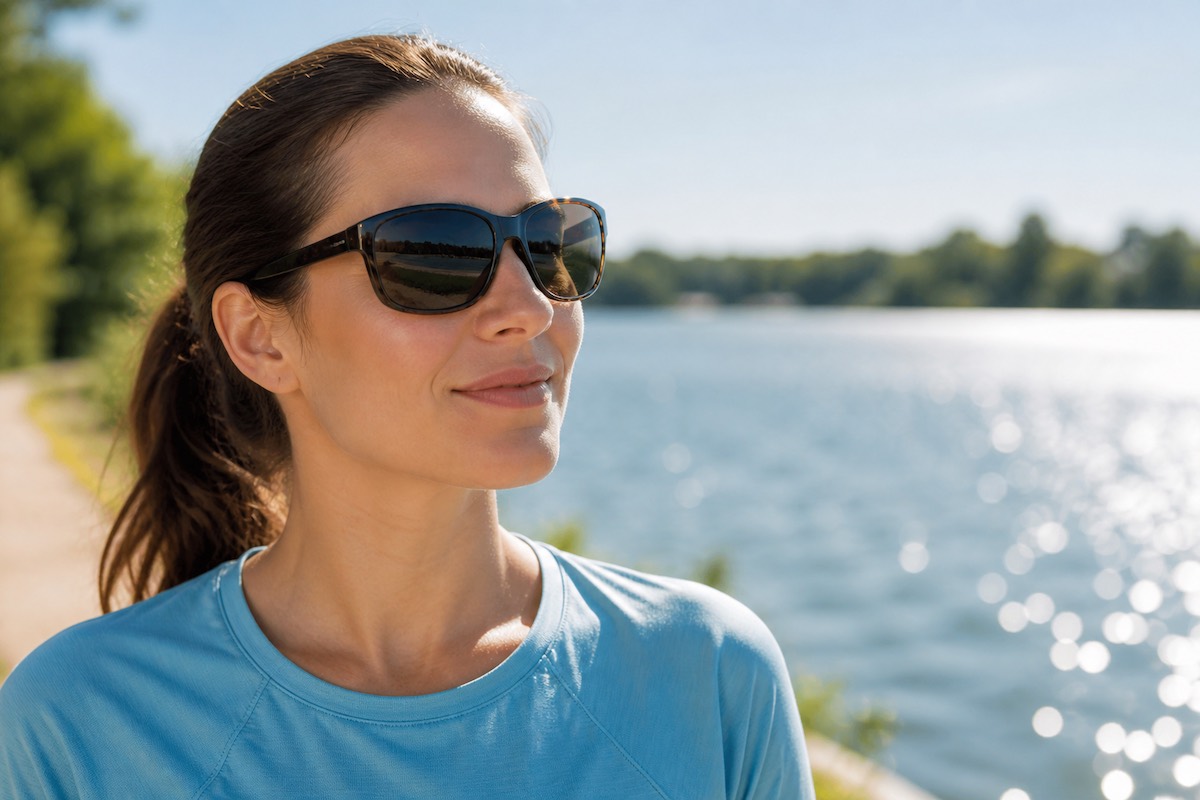
The most reliable everyday habit you can build is wearing sunglasses that block 99% or more of UV rays. Not all sunglasses offer this level of protection, so check the label before you buy. Darker lenses don’t automatically mean more UV protection, so look for a specific UV rating.
Remember to wear snow goggles for winter activities like skiing or snowshoeing. Snow reflects a large amount of UV radiation, and your exposure increases at higher altitudes. This is why protecting your eyes in winter is just as important as wearing sunscreen on a sunny summer day.
The Risks of Long-Term Exposure
A single case of photokeratitis heals, but repeated UV exposure over the years adds up. Over time, unprotected UV exposure is linked to a higher risk of cataracts and macular degeneration, both of which can affect your vision as you get older. Build good protective habits now to support your long-term eye health.
Take Care of Your Eyes Year-Round
Taking care of your eyes today can help you maintain clear and comfortable vision in the future. If your eyes are showing signs of excessive sun exposure or you want a more proactive approach to protecting your vision, Bluewater Optometry is here to help.
Our team offers thorough eye exams and personalized care to support your eye health. Book your appointment today and give your eyes the attention they deserve.