

You wake up with red, itchy eyes and wonder if you caught something from your coworker who had similar symptoms last week. Your eyes feel gritty, and there’s a sticky discharge that makes your eyelashes crusty. At Bluewater Optometry, we see many patients who worry about spreading their eye infection to family members or wonder if they should stay home from work.
Yes, conjunctivitis can be contagious, but it depends on what type you have. Viral and bacterial conjunctivitis spread easily from person to person, while allergic conjunctivitis doesn’t spread at all. Getting proper eye exams can help identify the type you have and get treatment.
What Makes Conjunctivitis Contagious
The type of conjunctivitis you have determines whether you can spread it to others. Viral and bacterial forms jump from person to person through direct contact with infected eye discharge.
When you touch your infected eye and then touch surfaces or shake hands, you leave behind germs that others can pick up. Allergic conjunctivitis happens when your body reacts to pollen, dust, or pet dander. You can’t catch this type from someone else.
The discharge from your eyes carries the infection. Even tiny amounts on your fingers, towels, or pillowcases can spread the condition to family members or coworkers.
How Long You Stay Contagious
Viral Conjunctivitis Timeline
You can spread viral conjunctivitis for up to 14 days, even after your symptoms improve. The first few days bring the highest risk because your body produces the most viral particles during this time.
Here’s what makes viral conjunctivitis tricky, you might spread it before you notice any symptoms. Your eyes can look normal while you’re already contagious.
Bacterial Conjunctivitis Timeline
Bacterial conjunctivitis stops spreading 24 hours after you start antibiotic treatment. Without treatment, you remain contagious as long as you have discharge from your eyes.
Thick, colored discharge signals an active bacterial infection. Once antibiotics clear this discharge, you’re no longer a risk to others around you. Using fresh eye drops as prescribed helps clear the infection faster.
Ways Conjunctivitis Spreads Between People
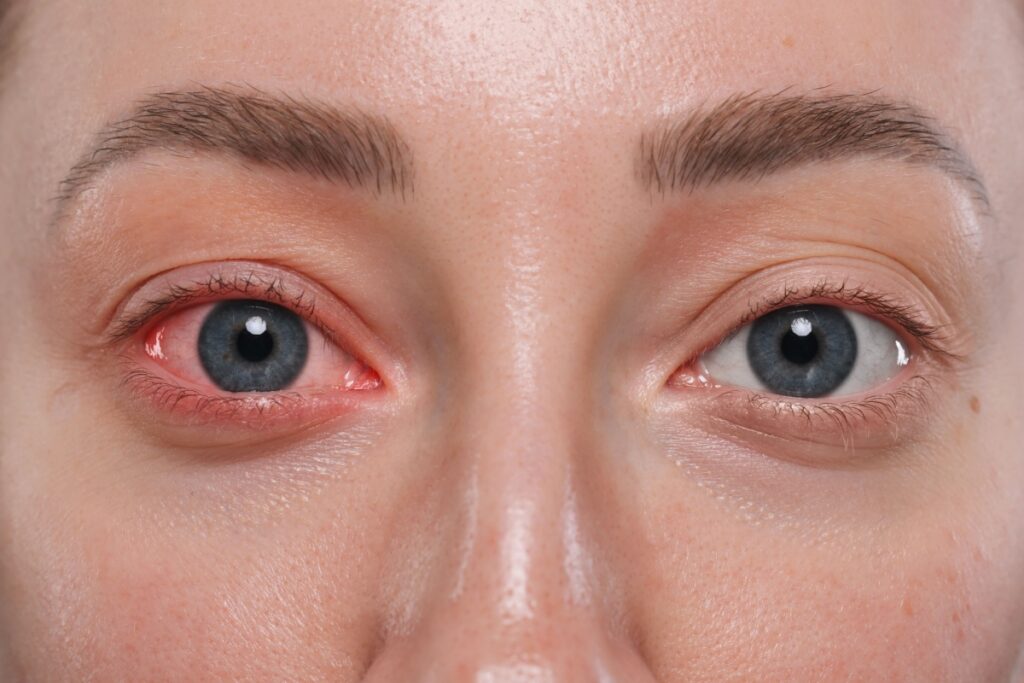
You touch contaminated surfaces like doorknobs, keyboards, or phones, then rub your eyes without thinking. This simple action transfers germs directly to your eye’s surface.
Sharing towels, pillowcases, or washcloths with someone who has conjunctivitis almost guarantees you’ll catch it. The fabric holds onto infected discharge long enough to spread to the next person who uses it.
Close contact activities like hugging, handshakes, or caring for sick children increase your exposure risk. Even touching the same toys, makeup, or contact lens cases can spread the infection. Contact lens safety becomes increasingly important during an eye infection.
Signs You Have the Contagious Type
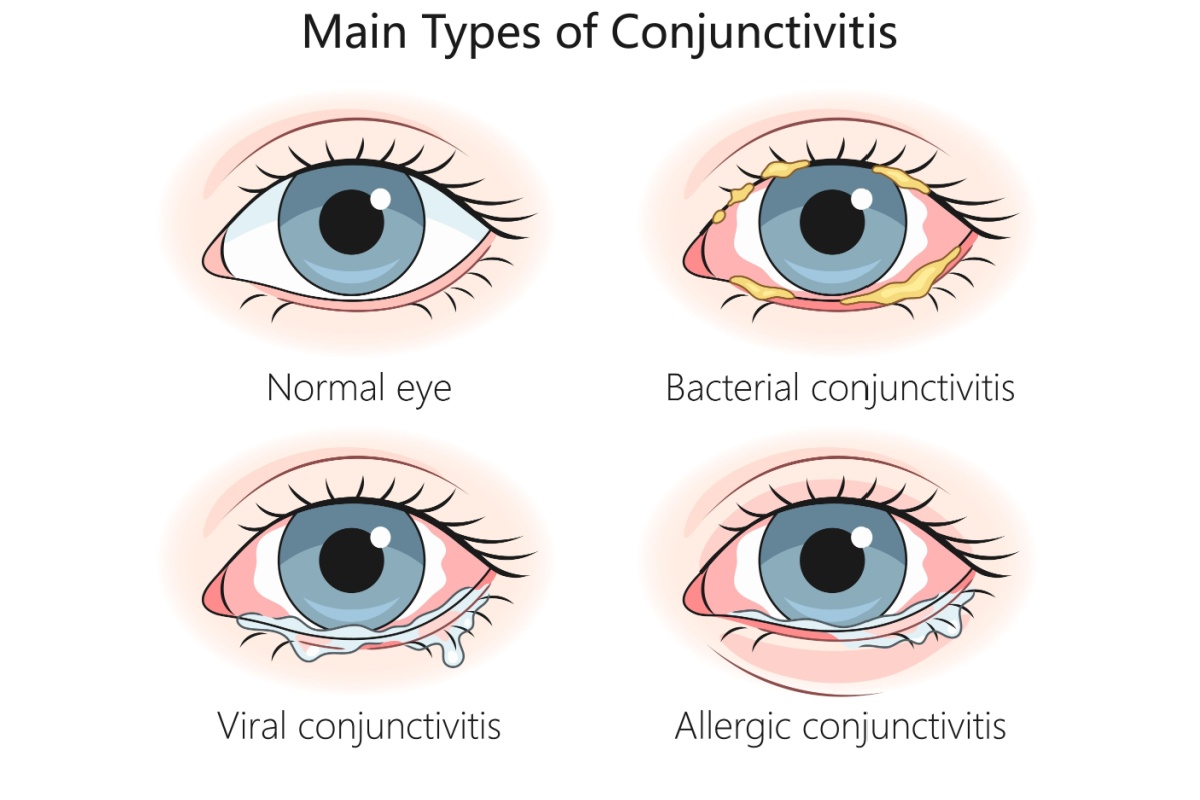
Thick yellow or green discharge that oozes from your eyes usually means bacterial conjunctivitis. This colored discharge dries overnight and glues your eyelashes together by morning.
Watery, clear discharge combined with cold symptoms like sneezing or a runny nose points to viral conjunctivitis. Your eyes might burn or feel like they have sand in them.
If your eyes itch intensely but you have clear, watery discharge without other cold symptoms, you likely have allergic conjunctivitis, which doesn’t spread to others. Sometimes other conditions get misdiagnosed as conjunctivitis when symptoms overlap.
When to Seek Professional Eye Care
Severe eye pain or sudden vision changes need immediate attention from an eye care professional. These symptoms can signal serious complications that require prompt treatment.
Contact lens wearers should see an optometrist right away when conjunctivitis symptoms develop. Wearing contacts with an eye infection can lead to corneal damage or more serious complications.
Children with conjunctivitis symptoms need evaluation quickly because their infections can progress faster than in adults. Our team at Bluewater Optometry can help determine the type of conjunctivitis and provide appropriate treatment to get your family back to comfortable, healthy vision.